

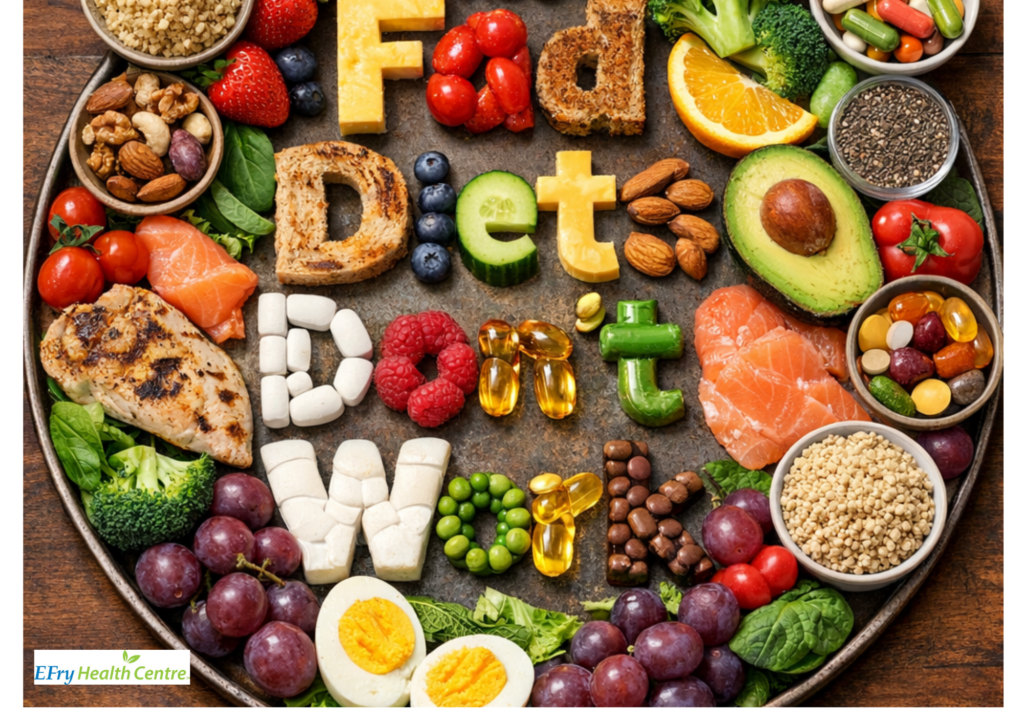
In today’s world, fad diets are everywhere, each promising quick weight loss and miraculous results. But do they genuinely work, and more importantly, are they safe? Let’s delve into what fad diets are, why they often fall short, and how you can make healthier, sustainable choices for weight management.
Diets and food trends – Canada’s Food Guide
Join us on Feb 27th at EFry Health Centre in Surrey, BC to hear my discussion on Fad Diets. We have some questions from our clients (who left anonymous questions in our box of ‘ask a dietitian’ located in our lobby) and some other useful tips on how to follow a healthy eating pattern without fad diets.
What Are Fad Diets?
Fad diets are popular weight-loss plans that gain attention for a brief period. They usually promise rapid weight loss through restrictive eating habits. However, these diets are often unsustainable and can even be dangerous.
Common Traits of Fad Diets
- Rapid Weight Loss Promises: They often guarantee quick results. For example, they might promise you a fast, easy approach to weight loss – “ take this green powder and lose 20 lbs in 1 week “ – YIKES!
- Restrictive Eating: Many eliminate or severely limit entire food groups. Overtime, this can cause inadeqaute intakes of vitamins and minerals. Eventually, this can lead to organ damage or brittle bones -UH OH
- Dependence on Products: Some require special supplements or products. This causes you to rely on the company or products they provide which can be unsustainable long term. – NO THANK YOU
- Costly: Fad diets can be quite expensive. Often, over time they can be even more costly than some of the most nutritious foods. Spend your money on whole foods, not powders. – OH NO!
- Difficult to Sustain: Long-term adherence is usually challenging. This can cause fluctuations in health, weight and energy levels. – I’LL PASS!
Why Fad Diets Don’t Work Long-Term
While initial weight loss may occur, it’s often not sustainable. Here’s why:
Muscle Loss: Many fad diets cause muscle loss, slowing metabolism and hindering long-term weight loss.
Nutrient Deficiencies: Restricting food groups can lead to a lack of essential vitamins and minerals.
Yo-Yo Dieting: The cycle of losing and regaining weight can damage your health and complicate future weight loss efforts.
Unsustainable: Extreme diets are hard to maintain, leading many to revert to old eating habits, regaining the lost weight.
Examples of Fad Diets
- Low Fat Diets: Often lead to nutrient deficiencies and potential overeating due to low fat intake.
- Intermittent Fasting: Time-restricted eating can result in weight loss due to smaller portions but may not be sustainable for all.
- Juice Cleanses: Replace meals with juices, lacking essential fiber and protein.
- The Ketogenic Diet: While effective for some, it is often followed without proper guidance, leading to potential health risks long term.
If you’re choosing any of these diets, or you want to find a way to make them sustainable, or include them in your everyday life or future health goals, follow up with your dietitian (or reach out to me!)
A Healthy Approach to Weight Management
Instead of quick fixes, focus on creating sustainable, healthy habits:
Balanced Diet: Incorporate a variety of fruits, vegetables, whole grains, lean protein, and healthy fats.
Portion Control: Be mindful of portion sizes to prevent overeating.
Regular Exercise: Aim for at least 150 minutes of moderate-intensity exercise weekly.
Hydration: Drink plenty of water throughout the day.
Mindful Eating: Listen to your body’s hunger and fullness cues.
Professional Guidance: Consult a registered dietitian or healthcare provider for personalized advice.
Key Takeaways
Fad diets often prove ineffective and potentially harmful over time. Instead, focus on building sustainable, healthy habits for long-term weight management and overall well-being. Always consult a healthcare professional or registered dietitian before making significant dietary changes.
Thanks!
Written by Carla Centola, RD
Registered Dietitian
Check out some of our other blogs for more information on nutrition and to get involved with our programs: